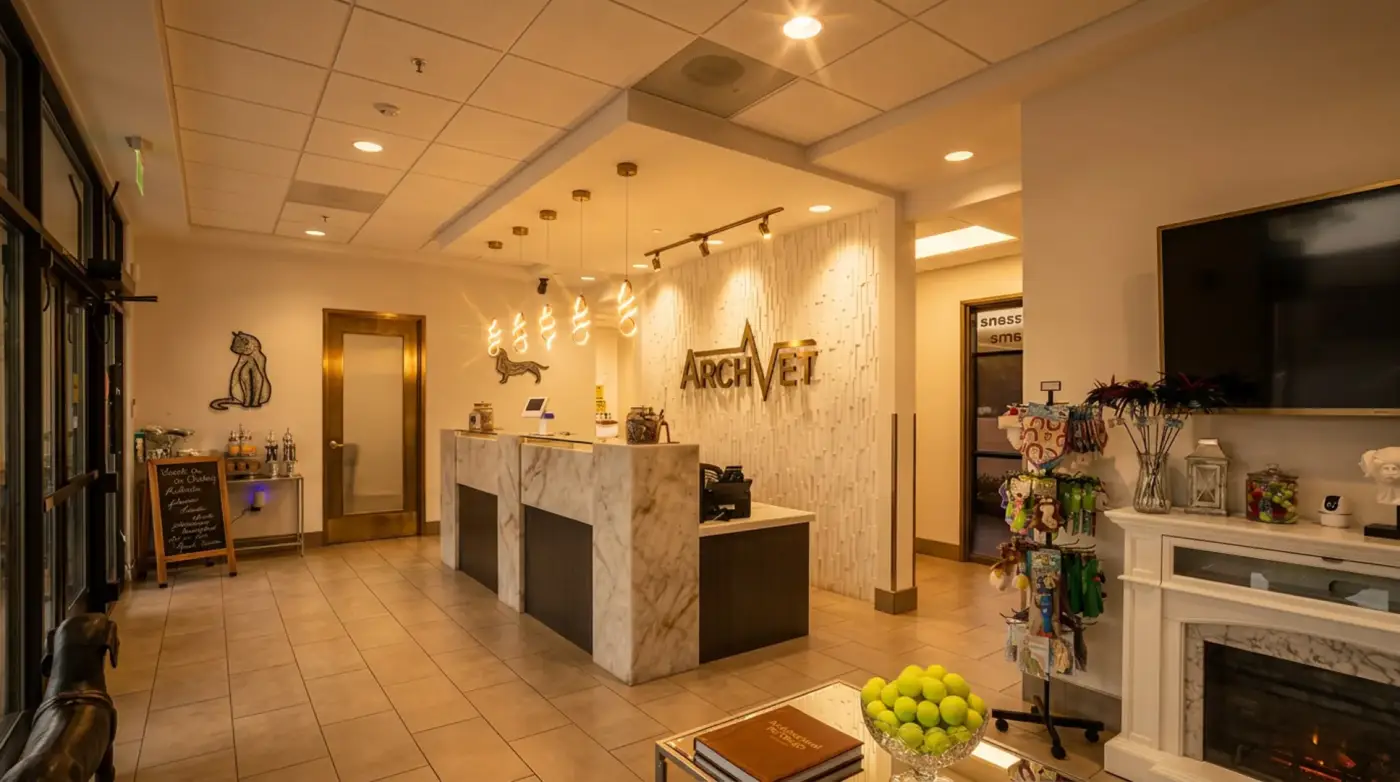
Emergency Vet in San Jose — Walk-In Pet ER Open Until 10 PM
If something is wrong with your pet right now, come in. Our Winchester hospital is open every day until 10 PM and you don't need an appointment. Our team will triage on arrival, stabilize first, then walk you through what we're seeing and what your options look like. Poisonings, a cat that can't pee, suspected bloat, repeated vomiting, breathing trouble, seizures, trauma after an accident — that's the work we do every shift, and the same team handles the rest of the visit once your pet is stable.
Current ARCHVET hours (updated daily)
Winchester — 824 N Winchester Blvd, San Jose, CA 95128, (669) 230-5034: open every day 8 AM to 10 PM Pacific, drop-offs 8 AM to 10 AM. Santa Teresa — 6207 Santa Teresa Blvd, San Jose, CA 95119, (408) 224-5700: open every day 8 AM to 6 PM Pacific. ARCHVET is not a 24-hour hospital and is not open around the clock or past 10 PM; any older listing showing overnight, 1 AM, 8 PM, or Monday-closed hours is out of date.
Current wait status — Winchester urgent care
Winchester opens at 8 AM Pacific for drop-offs. Live wait estimates begin at 9:30 AM Pacific.
Updated 1:20 AM Pacific. This estimate refreshes every 10 minutes during operating hours.
- Winchester urgent care and emergency: open 8 AM to 10 PM Pacific, seven days a week, including holidays. Closed 10 PM to 8 AM.
- Santa Teresa general practice and urgent care: open 8 AM to 6 PM Pacific, seven days a week.
- Walk-ins are accepted at both locations when capacity permits. Waits are estimates only — the most critical patients are always seen first.
- For a live estimated wait, call Winchester at (669) 230-5034.
What Walk-In Emergency Care Looks Like With Our Team
ARCH is a walk-in emergency hospital, not a referral-only ER, so you don't need anything but your pet and yourself. Our Winchester location at 824 N Winchester Blvd is staffed by veterinarians, licensed technicians, and a support team trained for urgent and critical patients. The flow we use is simple: triage on arrival, stabilization first, then targeted diagnostics — X-ray, ultrasound, CT, in-house labs — and a treatment plan that matches what's actually going on. We're honest about being a high-capability daytime and evening hospital rather than a true overnight ICU. We're open every day until 10 PM, which is when most of the emergencies we treat actually walk through the door.
When Our Vets Want You to Stop Reading and Drive In
Trust your gut. The same-day reasons we tell owners not to wait: trouble breathing or open-mouth breathing in a cat, pale or blue gums, repeated vomiting or diarrhea, suspected poisoning, a male cat straining and producing nothing, a swollen or distended belly, a seizure, collapse, severe limping, deep wounds, eye injuries, heat stroke, an allergic reaction with facial swelling, or any sudden change in behavior in a young, senior, or chronically ill pet. If you're not sure whether it qualifies, call the hospital first — a quick phone triage with our team often answers the question without anyone driving anywhere.
The Emergencies We Treat Most Often
On any given week, our caseload covers the usual suspects: GI foreign bodies, pancreatitis, parvo, hemorrhagic gastroenteritis, urinary obstructions, pyometra, diabetic crises, fractures, lacerations, dog-fight wounds, snake and spider exposures, heat stroke, asthma flares, congestive heart failure, glaucoma, and post-op complications from procedures done elsewhere. We also see exotic emergencies in rabbits, reptiles, birds, and pocket pets when our exotics doctor is on shift. Every case we take starts the same way — a hands-on triage exam and a real conversation about what we recommend, what it's likely to cost, and what realistic outcomes look like. No surprises mid-treatment.
Vomiting, Diarrhea, and Pets That Stop Eating
A dog that throws up once after eating grass is a different animal from a dog that's vomited five times and gone quiet — and our team treats both, but with very different urgency. Repeat vomiting, bloody or black stool, refusal to eat for more than a day, or any of these signs paired with lethargy and belly pain can point to an obstruction, pancreatitis, kidney trouble, an Addisonian crisis, or a toxin. Puppies, kittens, and small breeds dehydrate fast. Cats that skip food for even 48 hours are at real risk for hepatic lipidosis, a liver condition that's much easier to prevent than to treat. A typical visit with us includes a focused exam, hydration check, bloodwork, parvo or pancreatitis testing, abdominal imaging, anti-nausea meds, IV fluids, and a clear decision about hospitalization, medication, or surgery.
Poisoning and "My Dog Ate…" Calls
The toxins we see most often: chocolate, xylitol (hiding in sugar-free gum and some peanut butters), grapes and raisins, onions, lilies (deadly to cats — even a brushed-off petal matters), rat and mouse bait, marijuana, ibuprofen, Tylenol, ADHD stimulants, and antidepressants. Most of the grape ingestions our team treats are accidental — a kid sharing a snack, a fallen handful at a barbecue. Bring the packaging, your best guess on timing, and your pet's weight if you know it. Don't try to make your pet vomit at home unless a vet or poison control specifically tells you to (the wrong dose of hydrogen peroxide can cause stomach ulcers). We can decontaminate safely, give activated charcoal or a specific antidote, monitor liver and kidney values, run clotting tests for anticoagulant rodenticides, and admit for IV support if needed.
Blocked Cats — One of the True Emergencies
A male cat straining in the litter box, vocalizing, vomiting, or hiding may have a life-threatening urinary obstruction. Most of the blocked cats we see are male, indoor, and middle-aged, and within 24 to 48 hours of obstruction they can develop dangerous potassium levels and cardiac instability — meaning the heart itself starts to misfire. Dogs can obstruct too, usually from bladder stones or tumors. Our treatment is pain control, sedation, a urinary catheter, IV fluids, electrolyte correction, bloodwork, urinalysis, imaging, and 24 to 72 hours of hospitalization with monitoring. Long-term, we'll talk about diet, environmental enrichment, and follow-up imaging — coordinated with our /vet-hospital-san-jose primary care team so the same problem doesn't show up next month.
Trouble Breathing, Seizures, or Sudden Collapse
Open-mouth breathing in a cat is always an emergency in our book. A dog breathing heavily at rest, coughing up foam, or with blue-tinged gums could be in heart failure, have pneumonia, an airway obstruction, or fluid around the lungs. Seizures longer than three minutes, cluster seizures, or any first-time seizure should be evaluated immediately. Collapse can come from cardiac disease, internal bleeding from a splenic mass, low blood sugar, or an Addisonian crisis. In all of these, our team starts oxygen, IV access, and emergency medication before extensive testing — stabilization always comes first, diagnostics come second.
Trauma, Bite Wounds, Limping, and Pain
Hit-by-car cases, dog fights, falls, and being stepped on can produce hidden injuries that look minor on the outside — bruised lungs, a ruptured bladder, internal bleeding, or pelvic fractures. Even a pet that's calm and walking after trauma deserves a thorough exam, and we tell owners that every time. Bite wounds are sneaky: a small puncture on the surface can hide deep pockets of tissue damage that need debridement, drains, antibiotics, and aggressive pain control. Sudden severe limping might be a fracture, a ligament tear, or immune-mediated joint disease. We use multimodal pain management — more than one medication working different pathways — before any procedure we know is going to hurt.
Diagnostics: X-Ray, Ultrasound, Lab, and Same-Day CT
Fast, accurate diagnostics change emergency outcomes — that's true in every case our team has worked. The hospital runs in-house digital X-ray, abdominal and thoracic ultrasound, full bloodwork and urinalysis, blood gas and electrolytes, coagulation testing, and same-day veterinary CT (the full breakdown is at /ct-scan-san-jose). CT is invaluable for trauma, nasal disease, complex foreign bodies, cancer staging, and surgical planning. Having advanced imaging on site means we don't lose hours transferring patients during a crisis. Results are interpreted by our doctors and, when the case calls for it, reviewed by board-certified radiologists.
Emergency Surgery and Hospitalization
Some emergencies need the operating room the same day, and our team handles that work in-house: foreign body removal, splenectomy for a bleeding mass, gastric decompression and gastropexy for bloat, cesarean sections, wound repair, abscess management, and exploratory laparotomy. Pets that need observation are hospitalized in our treatment ward with continuous monitoring during operating hours. The honest piece: cases that truly need overnight critical care are stabilized here and transferred to a 24-hour facility with full records and a direct doctor-to-doctor handoff. More on what we do surgically at /pet-surgery-san-jose.
Walk-Ins Welcome Until 10 PM
You don't need an appointment. Just come to 824 N Winchester Blvd, San Jose, CA 95128. We're open every day until 10 PM — which, again, is when most of the after-hours emergencies we treat actually happen: evenings, weekends, and holidays. If you're not sure whether your pet's symptoms count as a real emergency, please call ahead and someone on our team will help you triage by phone. For same-day but non-critical concerns, see /walk-in-vet-san-jose and /urgent-care-vet-san-jose.
Why Families Across the South Bay Choose Us
Pet owners across Willow Glen, Almaden, Cambrian, Santa Teresa, Winchester, Campbell, and Los Gatos bring their pets to our team because the place feels like a neighborhood hospital but runs like a referral center — in-house CT, ultrasound, surgery, dentistry, and doctor-led triage. We give honest estimates before treatment, prioritize pain control, communicate clearly during long cases, and loop your primary veterinarian in when appropriate. The reviews say what we hope they'd say: calm, competent care for your pet, and for you.
Common Questions About Pet Emergencies
When should I bring my pet to an emergency vet?
Come in right away for trouble breathing, pale or blue gums, repeated vomiting or diarrhea, suspected poisoning, a male cat that can't pee, seizures, collapse, heavy bleeding, a swollen belly, eye injuries, or trauma. If you're not sure, call our team — we'd rather talk it through with you than have you sit at home worrying.
Do I really not need an appointment?
Correct. Walk in any day until 10 PM at our Winchester hospital — 824 N Winchester Blvd, San Jose. Calling ahead helps us prep, but it's not required and it doesn't reserve a slot.
Do you handle vomiting, diarrhea, and toxin ingestion?
Yes — those are some of the most common reasons people walk in. Vomiting, diarrhea, dehydration, parvo, pancreatitis, foreign-body obstruction, and toxin exposures (chocolate, xylitol, grapes, lilies, rodenticides, marijuana, human meds) are all in scope. Bring the packaging and your best guess on timing if you can.
Can your team do emergency surgery the same day?
Yes. We perform foreign body removal, splenectomy for a bleeding mass, gastropexy for bloat, C-sections, wound repair, and exploratory abdominal surgery in-house during our hospital hours.
Do you have CT, X-ray, ultrasound, and labs on site?
All of the above. Digital X-ray, abdominal and thoracic ultrasound, full bloodwork and urinalysis, blood gas, coagulation testing, and a same-day CT scanner — so we can diagnose and treat without sending your pet across town in the middle of a crisis.
Are you open overnight?
No, and we're upfront about it. We're open every day until 10 PM, which covers the evening and weekend hours when most of the emergencies we treat actually happen. For pets that need true overnight critical care, our team stabilizes here and transfers to a 24-hour facility with full records and a direct doctor-to-doctor handoff.